Daily Voice | Don’t base your investment decisions on market levels if you want to build robust long-term portfolio, says Mrinal Singh of InCred Asset Management

Sectors related to spending on individual mobility, education, leisure, travel, entertainment, consumer durables will contribute to the journey of taking our Per capita income to $4,700 by 2030 which is around $2200 as per IMF data.

Daily Voice | Don’t base your investment decisions on market levels if you want to build robust long-term portfolio, says Mrinal Singh of InCred Asset Management

Sectors related to spending on individual mobility, education, leisure, travel, entertainment, consumer durables will contribute to the journey of taking our Per capita income to $4,700 by 2030 which is around $2200 as per IMF data.

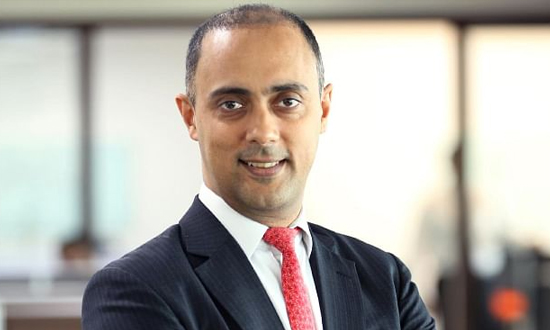
Trying to time the market is a futile exercise since the equity market has its own ebbs and flows. If you are really looking to build a robust long-term portfolio then you must identify good companies that have an excellent moat and strong revenue growth potential, Mrinal Singh, CEO & CIO at InCred Asset Management said in an interview to Moneycontrol.

Don’t base your investment decisions on market levels, Singh recommends.

He believes outlook for the Indian economy is quite robust. “We see potential, particularly in segments that are driven by capacity expansion. Our propositions are more inclined towards domestic manufacturing and capacity addition, sectors which are going to meaningfully participate into China plus one,” says Singh who previously worked as deputy CIO at ICICI Prudential AMC. Edited excerpts:

Do you think equities have seen a decent correction given the multiple issues like inflation, geopolitical tensions, spike in oil prices and policy tightening, that markets have been facing?

Cyclicality is in the DNA of markets and thus, it is unfair to look at markets in silos or only at specific periods in time.

Cycles have primarily remained the same through the ages for essentially the same reason that the fundamentals of the human life cycle have remained the same over the ages: because human nature doesn’t change much over time. For example, fear, greed, jealousy, and other basic emotions have remained constants and are big influences that drive cycles. Inevitably, these spill into the investment decision process as well and drive the markets in the short-term.

To quote Benjamin Graham, the Father of Value Investing, “In the short run, the market is like a voting machine–tallying up which firms are popular and unpopular. But in the long-run, the market is like a weighing machine–assessing the substance of a company”.

Thus, the factors that you mentioned, i.e., the risk of inflation, geopolitical tensions, spiking oil prices, and rising interest rates, have impacted markets and led to a decent correction. However, it is important to understand that their impact is transient in nature. As highlighted in the quote above, in the near term, markets act like a voting machine, and hence, these factors lead to correction in the stock market. This also presents us with an opportunity to buy good quality businesses at a discount to an intrinsic value which acts as a margin of safety.

Being a fundamental research-based asset management company, we believe in evaluating the intrinsic value of the company which is determined based on bottom-up factors which remain relevant irrespective of the changing macros and risks. If a company has a moat, it has the ability to earn a higher return on invested capital than the cost of equity and grow the business through market share gain or sector growth and continue to increase its intrinsic value in the sector.

The bottom line is that corrections always offer an opportunity to buy assets below intrinsic value, thereby creating a higher return than the market.

Do you see significant impact on FY23 growth forecast for India due to oil shocks?

Inflation is a necessary evil. Primarily, it is caused by a demand-supply mismatch. Whether supply is interrupted or demand rises faster than the supply, both can lead to rising prices. One of the biggest ramifications of COVID was the impact it had on global supply chains. Due to restrictions on movement and as a result of countries reassessing the risk of supply chain concentration, freight rates increased and there was a general shortage of basic commodities in some countries. Thus, the inflation that we have recently witnessed stems from supply-side challenges.

Keeping in mind the current economic landscape and the fact that the world is on a path to recovery in the aftermath of the pandemic, supply chains are likely to normalize, assuming that there are no new COVID variants on the anvil to disrupt this recovery. As the supply side constraints dissipate, prices should cool off.

What are the long term implications of current geopolitical tensions-led inflation concerns, supply worries etc?

It is important to remember that in equity markets, there will always be pockets of opportunity in the midst of new and emerging risks. The risks highlighted above in terms of inflationary or geopolitical concerns are more transitory in nature. Inarguably there are likely to have an impact on markets and companies in the short term. However, over the long term, they are also likely to generate unique opportunities. So, what really matters is identifying companies that have a unique value proposition that they can protect over the long run or companies that are well-positioned to capitalise on emerging opportunities.

Do you expect significant margin pressure for companies due to spike in commodity prices?

If a company is negatively affected and loses some profitability there is some other company that gains. Take for example the rising crude oil prices. Inarguably it will have a broad negative impact on India. However, there are certain pockets that are also likely to benefit from the rise in crude prices. These include:1) Electric vehicles (rising crude oil prices will lead to an increase in the running cost of internal combustion engines further)2) Exporters – currency devaluation helps exporters. And the purchasing power of crude exporting countries increases (Middle East, Africa)
3) Rail logistics will gain market share as the cost of road transportation increases

As companies rush to capitalise upon these opportunities, price shocks are likely to be contained, thereby having minimal impact on consumption.

Is it the time to rebuild portfolio with beaten-down good names?

Trying to time the market is a futile exercise since the equity market has its own ebbs and flows. If you are really looking to build a robust long-term portfolio then you must identify good companies that have an excellent moat and strong revenue growth potential. Assess these companies, arrive at a fair value, and then look to invest in them when they are available at a good discount to their fair value. Don’t base your investment decisions on market levels.

What are the investment themes you would like to bet on for the long term?

Outlook for the Indian economy is quite robust, we see potential, particularly in segments that are driven by capacity expansion. Our propositions are more inclined towards domestic manufacturing and capacity addition, sectors which are going to meaningfully participate into China plus one.

However, there could be an addition to that area such as textiles, chemicals, engineering boards, automobiles, and sectors aligned to a greener future of the economy. We believe even housing & mortgage space looks appealing.

Sectors related to spending on individual mobility, education, leisure, travel, entertainment, consumer durables will contribute to the journey of taking our Per capita income to $4,700 by 2030 which is around $2200 as per IMF data.

Disclaimer: The views and investment tips expressed by investment experts on Moneycontrol.com are their own and not those of the website or its management. Moneycontrol.com advises users to check with certified experts before taking any investment decisions.

Leave a comment

Vijay Gomatam

Consultant – Investment Banking

Vijay Gomatam has over 20 years of banking experience across M&A, corporate finance, capital markets, and corporate banking, with a strong focus on cross-border deal origination and execution across India, Southeast Asia, Japan, and Australia. He has deep sector expertise in industrials, IT services, media, and telecom, with extensive experience in India - Southeast Asia and India–Japan transactions. Vijay previously served as Director at MUFG Bank, Singapore, where he led the India - Japan M&A corridor, and earlier worked with Deutsche Bank, Merrill Lynch, Houlihan Lokey, and Edelweiss Alternative Asset Advisors.

His transaction experience includes Motherson Group’s acquisition of TSE-listed Yachiyo Industries, Takahata India’s stake sale to SPRL, Toppan Form’s acquisition of PT RDS in Indonesia, Mitsui’s investment in FKS Food & Agri, CVC’s investment in PT LinkNet, and capital market transactions for Southeast Asian media and telecom clients including SingTel, Axiata, and Bakrie Group.

He holds an MBA from IIM Calcutta and a B.E. (Hons.) from Nanyang Technological University, Singapore.

Akbar Khan

Senior Advisor – Investment Banking

Akbar Khan has over twenty years of experience across M&A advisory, Private Equity, and Corporate M&A, along with a decade as an entrepreneur and operator. He has held senior roles at Bank of America Merrill Lynch in India and London, where he led Telecom & Technology Investment Banking, Private Equity coverage, and M&A, and at General Electric, where he served as Head of Corporate Development and M&A for India and the MENA region. He has advised global corporates and financial sponsors including Reuters Plc, Telecom Italia, Hellenic Telecom, MTN, Tata Group, Apax Partners, Warburg Pincus, and TA Associates, and has led several notable transactions. These include advising E2E Networks on

its USD 50M capital raise, QuEST Global on its USD 75M Series B private placement to Warburg Pincus, Rain Technologies on its USD 65M Series A financing from QED Investors and Invus, Augnito.ai on its Pre-Series A raise from Apollo Hospitals Group, Tata Consultancy Services on the acquisition of Citigroup’s captive back-office unit, Forthnet in Greece on the acquisition of Netmed, and Telecom Italia on the sale of Cosmote via a leveraged buyout by Apax Partners and TPG.

In addition, Akbar co-founded and served as CEO of Rain Technologies India an earned wage access fintech platform.

He holds an MBA from London Business School and is a UK-qualified Chartered Accountant.

Shreyan ML

Managing Director – Healthcare & Pharma

Shreyan ML leads the healthcare and pharma investment banking practice and brings over 15 years of experience across investment banking, corporate M&A, and management consulting within the pharmaceutical sector. Prior to joining MAPE, he worked with Spark Capital, Strides Group, Wanbury Limited, and Tata Strategic Management Group.

His deal experience includes advising Curatio Healthcare on the sale of its business to Torrent Pharmaceuticals; Sale of TTK’s human pharma business to Bharat Serums; Glenmark Pharmaceuticals on the sale of the Razel brand to KKR-backed JB Chemicals & Pharma and the sale of nine dermatology brands to Eris Oaknet.

As Corporate M&A Head at Strides Group, he was involved in thesale of Agila to Mylan and led the animal health strategy at Sequent Scientific, executing over 12 transactions including fundraises and cross-border acquisitions.

He holds an MBA from IIM Indore and is a computer engineer from NIT Karnataka.

Arjun Mukherjee

Managing Director – Investment Banking

Arjun Mukherjee brings over 20 years of investment banking experience, with a strong focus on mergers & acquisitions and capital raising across Industrials, Education, Telecom, Cement, and Healthcare sectors. Prior to joining InCred Capital, he was part of the senior leadership team at MAPE Advisory Group for over a decade and has previously worked with Lazard, Ambit Capital, and Macquarie Capital.

His deal experience includes advising Veranda Learning on multiple acquisitions and its IPO, Emami on its bid for Paras Pharma, HeidelbergCement on the acquisitions of Mysore Cement and Indo Rama Cement, Italcementi on the acquisition of Sri Vishnu Cement along with an open offer, Bharti Airtel on the acquisitions of Hexacom India and the Spice Calcutta circle, as well as the sale of NLD rights to VSNL, Advent on its bid for Lafarge India.

He has also advised Jagdale Industries on the sale of its electrolyte drinks brand to Johnson & Johnson, promoters of Orissa Sponge on stake sales to Bhushan Steel and Monnet Ispat and on takeover defence, Fortis Healthcare on takeover defence and the sale of a minority stake to Khazanah, ICI India on the sale of its Nitrocellulose business to Actis and its rubber chemicals business, Jai Balaji Industries on the sale of its DI pipe unit and on QIP fund raising, Orbit Corporation and Ansal APIL on QIP-led equity fund raises, Walton Street Capital on raising a USD 500 million India-focused real estate fund, and on acquisition debt funding for the purchase of the RL Fine Chem API business.

Ashish Ambwani

Managing Director – Investment Banking

Ashish Ambwani has two decades of investment banking experience with a focus on cross-border M&A and Private Equity, and deep sector expertise across Consumption &Retail, Industrials and Digital businesses. He previously served as Director at Lazard for over 12 years and began his career at KPMG.

He has worked on numerous transactions including Osam Dairy’s sale to Dodla Dairy, Livpure’s capital raise from M&G Investments, QIMA’s acquisition of EFRAC Limited, Raymond Consumer Care’s FMCG sale to Godrej Consumer, IPO of Ethos Limited, Manohar Packaging’s sale to Parksons Packaging, MM Polytech’s sale to Huhtamaki, YY Inc.’s acquisition of Bigo, Kama Ayurveda’s fund raise and sale to Puig, Magnet360’s sale to Mindtree, Danone’s acquisition of Wockhardt nutrition assets, UCB’s sale of Indian brands to Dr Reddy’s, Sabero Organics’ sale to Coromandel, International Paper on its acquisition of AP Paper, Avantor on its acquisition of RFCL.

He holds an MBA from IIM Lucknow and a has a degree in Electrical & Electronics Engineering from NIT Trichy.

Jacob Mathew

Consultant- Investment Banking

Jacob Mathew brings over 25 years of experience in investment banking, private equity, and fundraising. He co-founded MAPE Advisory, a boutique investment bank focused on mid-market companies. Prior to MAPE, he was a Vice President (M&A) at Merrill Lynch India and played a key role in setting up the corporate finance practice at PwC India.

He has worked and led numerous transactions including the acquisition of Coats Viyella’s garment business by the AV Birla Group, the sale of Burnol and Coldarin brands, Dr Reddy’s buyout of American Remedies, and the sale of Diamond Dychem to Ciba AG. At MAPE, he led transactions across technology, telecommunications, consumer, healthcare, and retail sectors. His key clients include Coffee Day Enterprises, Strides, Igarashi Motors, J&J India, and Jyothi Labs.

He holds a PGDM from IIM Calcutta and is a Civil Engineer.

M Ramprasad

Consultant – Investment Banking

M Ramprasad has over 25 years of experience across investment banking, private equity, and fundraising. He co-founded MAPE Advisory, a boutique Indian investment bank focused on mid-market companies, which later merged with the Investment banking team at InCred in 2020. Prior to MAPE, he was a Senior Vice President at Merrill Lynch India, leading South India operations.

He has led marquee transactions for leading business groups including Tata Group, DuPont, ICICI Bank, Dr Reddy’s, and Sify, and at MAPE advised on landmark deals across manufacturing, infrastructure, and financial services. His key clients include Murugappa Group, ELGi Equipments, Curatio, Jyothi Labs, Karvy Financial Group, Star Health, and CRH Group.

He holds a PGDM from BIM Trichy and a degree in Chemistry.

Sanjay Singh

Head of Investment Banking – InCred Capital

Sanjay Singh is the Head of Investment Banking at InCred Capital, where he leads coverage across both advisory and equity capital markets. He brings over 20 years of experience across investment banking, strategy, and operations, with deep expertise in the pharmaceuticals and healthcare sectors.

Prior to joining InCred, he held leadership roles at BDA Partners as Head of India and Co-Head of Healthcare Asia, and at KPMG as Partner and Head of Life Sciences in India. He has also worked with Dr. Reddy’s Laboratories and Glenmark Pharmaceuticals.

His transaction experience includes advising Chemfield Cellulose on its divestment to Oji Holdings, Archimica S.p.A. on its acquisition by PI Industries, Synokem Pharmaceuticals on growth investment from TA Associates, Isagro SpA on the divestment of Isagro Asia Agrochemicals to PI Industries, SMT on its equity raise from Morgan Stanley Private Equity, Astec LifeSciences on the sale of equity to Godrej Agrovet and Nihon Nohyaku on its acquisition of Hyderabad Chemical Limited amongst others.

Sanjay holds an MBA from IIM Bangalore and a B Tech from IIT BHU.