Positive financial results from corporates are supportive of credit strategies

From late 2018, credit risk funds had a rough run, under the hammer as they were with payment defaults. The Franklin Templeton crisis worsened the problem in 2020. Investors exited credit risk funds due to worries of more blow-ups happening.  But the regulator SEBI and fund managers got their act together. Over the past couple of years, portfolios have been de-risked and brought back into investor contention. Smart investors knew better and some of them stayed put. These funds have delivered 9.4 percent returns on an average in the last one year, as against to 4.9 percent from short-term debt funds, 4.6 percent each by Banking & PSU funds and corporate debt funds. Credit risk funds, on an average, outperformed all other debt funds last year at a time when interest rates were kept low. With inflation at nearly 6 percent, credit risk is the only category with inflation-beating returns. Still, investing in credit risk funds is a high-risk strategy.

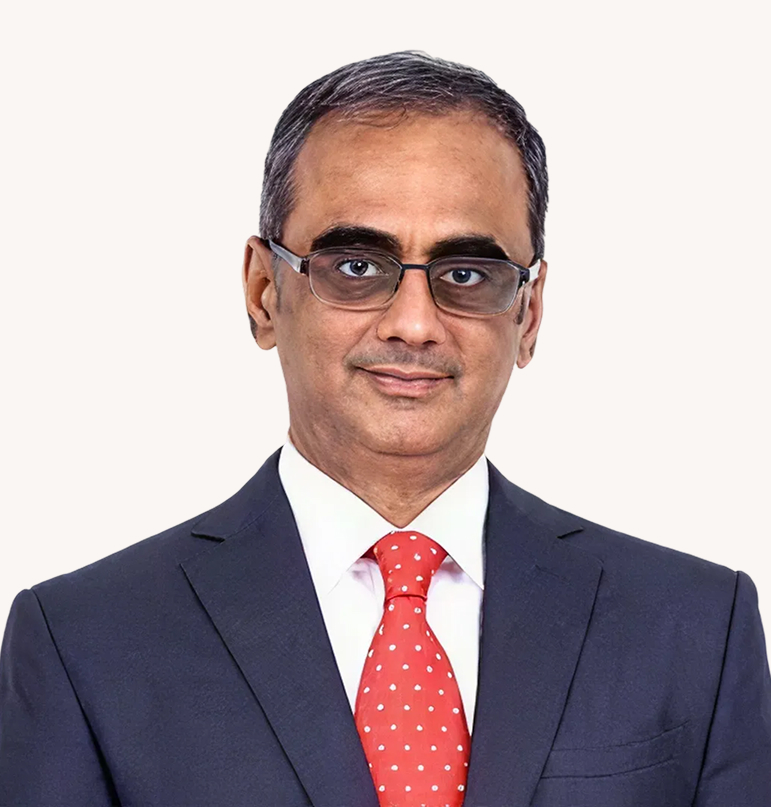
Moneycontrol spoke to industry experts on how investors should wade through credit risk funds in the current environment

R Sivakumar, Head fixed-income, Axis MF

We are in a rising rate environment globally and over the last year or so, we have even seen domestic yields firm up. Credits tend to outperform in such an environment and this happens because of couple of reasons. One is credits already have higher yields vis-à-vis a debt paper of a comparable maturity on AAA or G-Sec yield curve. The second is that the macroeconomic environment we are in, which allows rates to go up, is also typically positive for economic growth. Credit strategy tends to do better in such an environment. We have already seen an improvement in growth in recent quarters with RBI and government projecting growth of close to eight percent in coming financial year. So, one expects to see positive financial results from corporates, which are, again, supportive of credit strategies.

Credit funds by and large tend to be of shorter duration than other AAA-rated-oriented portfolios. So, the duration impact in a rising interest rate environment is less to start with. And within that also, when you have a rising interest rate environment, typically the G-Sec and AAA-rated yields tend to rise more than credit, that is to say the spreads compress in a rising interest rate environment. Lower-rated bonds like those rated single A tend to be priced on an absolute basis or relative to other single A or AA-rated instrument, rather than relative to G-Secs. So, they often don’t move in sync with G-Sec yields and this is why the credit spreads compress. This again provides protection against duration risk or mark-to-market impact of rising interest rate.

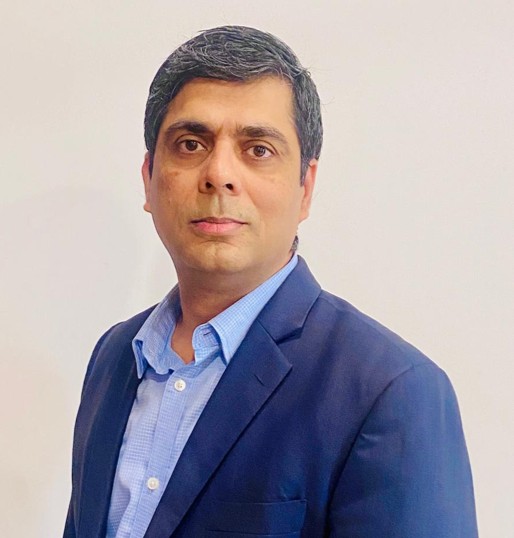
Nitin Rao, chief executive officer, InCred Wealth

Taking credit risk on companies is definitely less risky than what it was two years back. The only way in which you can increase your debt returns right now is by putting some part of your portfolio – 10-15 percent – in credit exposures. But, make sure that such an allocation fits your risk-profile. Investors can either do direct credit where they can buy debentures of AA-rated or single A-rated corporates. With the latter they can even get yield to maturity (YTM) of 9 percent, but this comes with high risks. Or investors looking for a diversified portfolio can go for credit risk funds, which are offering YTM of 6.7 percent on an average, which is also attractive.

Today, credit risk funds still not have enough papers in their portfolios, which can potentially take their YTMs to close to 8 percent. As and when interest rates go up, credit risk funds will also need to invest in fresh papers yielding higher rates, which are available in the single-A rated segment. So, there is scope for returns to further improve as YTMs in these funds inch closer to 8 percent. Investors can consider credit risk funds from one-two-year perspective.

Vidya Bala, co-founder, Primeinvestor.in

After April 2020, there has been quite a bit of clean-up in the credit risk category and also there have been regulatory changes brought in by the Securities and Exchange Board of India (SEBI) to improve risk-management practices. Now, credit risk funds have better liquidity in their portfolios so that if there is any repeat of redemption pressure like the one seen in 2020 following COVID-19 outbreak, they can handle it better. Credit risk funds have also reduced the risks in the portfolios. This is not true for all the credit risk funds, but this is the broad trend we have been seeing.

The nature of risks they are taking, the time-frame for which they are making these investments, all this has been tweaked a bit. However, this category is still not for all investors. This category is for risk-taking investors who are looking for additional returns. This can’t be just another debt fund for diversification in your portfolio. For that, a corporate bond fund or short duration fund should fit the bill. The former is suitable for a medium duration investment. Investors looking for slightly higher returns can invest in credit risk funds, but should make sure to check for any group concentration risk in the portfolio and come in with a 3-5 year investment horizon. The risks around credit risk category might have reduced than before, provided you pick the right fund.

Vikram Dalal, managing director, Synergee Capital

We will have to wait and see if there are any major NPA issues in the books of non-bank financial companies (NBFCs) after the additional six-month window given to NBFCs to comply with asset classification norms, is over. So, the picture is not yet fully clear there. We still don’t know exactly how much NPAs they are carrying their books. A large chunk of credit investments are in NBFCs as they are major players in credit markets to meet their funding requirements.

Apart from credit risk, there is also duration risk that can impact credit risk funds, which are holding longer duration papers. This depends on the fund manager and how he has built the portfolio, whether he has been savvy enough to shift to shorter duration papers before interest rates start to rise. So, investors should review the portfolio, check the duration of the portfolio, whether the credit investments are in known companies or in completely unknown entities, and then decide on which credit fund they want to invest in.

Leave a comment

Vijay Gomatam

Consultant – Investment Banking

Vijay Gomatam has over 20 years of banking experience across M&A, corporate finance, capital markets, and corporate banking, with a strong focus on cross-border deal origination and execution across India, Southeast Asia, Japan, and Australia. He has deep sector expertise in industrials, IT services, media, and telecom, with extensive experience in India - Southeast Asia and India–Japan transactions. Vijay previously served as Director at MUFG Bank, Singapore, where he led the India - Japan M&A corridor, and earlier worked with Deutsche Bank, Merrill Lynch, Houlihan Lokey, and Edelweiss Alternative Asset Advisors.

His transaction experience includes Motherson Group’s acquisition of TSE-listed Yachiyo Industries, Takahata India’s stake sale to SPRL, Toppan Form’s acquisition of PT RDS in Indonesia, Mitsui’s investment in FKS Food & Agri, CVC’s investment in PT LinkNet, and capital market transactions for Southeast Asian media and telecom clients including SingTel, Axiata, and Bakrie Group.

He holds an MBA from IIM Calcutta and a B.E. (Hons.) from Nanyang Technological University, Singapore.

Akbar Khan

Senior Advisor – Investment Banking

Akbar Khan has over twenty years of experience across M&A advisory, Private Equity, and Corporate M&A, along with a decade as an entrepreneur and operator. He has held senior roles at Bank of America Merrill Lynch in India and London, where he led Telecom & Technology Investment Banking, Private Equity coverage, and M&A, and at General Electric, where he served as Head of Corporate Development and M&A for India and the MENA region. He has advised global corporates and financial sponsors including Reuters Plc, Telecom Italia, Hellenic Telecom, MTN, Tata Group, Apax Partners, Warburg Pincus, and TA Associates, and has led several notable transactions. These include advising E2E Networks on

its USD 50M capital raise, QuEST Global on its USD 75M Series B private placement to Warburg Pincus, Rain Technologies on its USD 65M Series A financing from QED Investors and Invus, Augnito.ai on its Pre-Series A raise from Apollo Hospitals Group, Tata Consultancy Services on the acquisition of Citigroup’s captive back-office unit, Forthnet in Greece on the acquisition of Netmed, and Telecom Italia on the sale of Cosmote via a leveraged buyout by Apax Partners and TPG.

In addition, Akbar co-founded and served as CEO of Rain Technologies India an earned wage access fintech platform.

He holds an MBA from London Business School and is a UK-qualified Chartered Accountant.

Shreyan ML

Managing Director – Healthcare & Pharma

Shreyan ML leads the healthcare and pharma investment banking practice and brings over 15 years of experience across investment banking, corporate M&A, and management consulting within the pharmaceutical sector. Prior to joining MAPE, he worked with Spark Capital, Strides Group, Wanbury Limited, and Tata Strategic Management Group.

His deal experience includes advising Curatio Healthcare on the sale of its business to Torrent Pharmaceuticals; Sale of TTK’s human pharma business to Bharat Serums; Glenmark Pharmaceuticals on the sale of the Razel brand to KKR-backed JB Chemicals & Pharma and the sale of nine dermatology brands to Eris Oaknet.

As Corporate M&A Head at Strides Group, he was involved in thesale of Agila to Mylan and led the animal health strategy at Sequent Scientific, executing over 12 transactions including fundraises and cross-border acquisitions.

He holds an MBA from IIM Indore and is a computer engineer from NIT Karnataka.

Arjun Mukherjee

Managing Director – Investment Banking

Arjun Mukherjee brings over 20 years of investment banking experience, with a strong focus on mergers & acquisitions and capital raising across Industrials, Education, Telecom, Cement, and Healthcare sectors. Prior to joining InCred Capital, he was part of the senior leadership team at MAPE Advisory Group for over a decade and has previously worked with Lazard, Ambit Capital, and Macquarie Capital.

His deal experience includes advising Veranda Learning on multiple acquisitions and its IPO, Emami on its bid for Paras Pharma, HeidelbergCement on the acquisitions of Mysore Cement and Indo Rama Cement, Italcementi on the acquisition of Sri Vishnu Cement along with an open offer, Bharti Airtel on the acquisitions of Hexacom India and the Spice Calcutta circle, as well as the sale of NLD rights to VSNL, Advent on its bid for Lafarge India.

He has also advised Jagdale Industries on the sale of its electrolyte drinks brand to Johnson & Johnson, promoters of Orissa Sponge on stake sales to Bhushan Steel and Monnet Ispat and on takeover defence, Fortis Healthcare on takeover defence and the sale of a minority stake to Khazanah, ICI India on the sale of its Nitrocellulose business to Actis and its rubber chemicals business, Jai Balaji Industries on the sale of its DI pipe unit and on QIP fund raising, Orbit Corporation and Ansal APIL on QIP-led equity fund raises, Walton Street Capital on raising a USD 500 million India-focused real estate fund, and on acquisition debt funding for the purchase of the RL Fine Chem API business.

Ashish Ambwani

Managing Director – Investment Banking

Ashish Ambwani has two decades of investment banking experience with a focus on cross-border M&A and Private Equity, and deep sector expertise across Consumption &Retail, Industrials and Digital businesses. He previously served as Director at Lazard for over 12 years and began his career at KPMG.

He has worked on numerous transactions including Osam Dairy’s sale to Dodla Dairy, Livpure’s capital raise from M&G Investments, QIMA’s acquisition of EFRAC Limited, Raymond Consumer Care’s FMCG sale to Godrej Consumer, IPO of Ethos Limited, Manohar Packaging’s sale to Parksons Packaging, MM Polytech’s sale to Huhtamaki, YY Inc.’s acquisition of Bigo, Kama Ayurveda’s fund raise and sale to Puig, Magnet360’s sale to Mindtree, Danone’s acquisition of Wockhardt nutrition assets, UCB’s sale of Indian brands to Dr Reddy’s, Sabero Organics’ sale to Coromandel, International Paper on its acquisition of AP Paper, Avantor on its acquisition of RFCL.

He holds an MBA from IIM Lucknow and a has a degree in Electrical & Electronics Engineering from NIT Trichy.

Jacob Mathew

Consultant- Investment Banking

Jacob Mathew brings over 25 years of experience in investment banking, private equity, and fundraising. He co-founded MAPE Advisory, a boutique investment bank focused on mid-market companies. Prior to MAPE, he was a Vice President (M&A) at Merrill Lynch India and played a key role in setting up the corporate finance practice at PwC India.

He has worked and led numerous transactions including the acquisition of Coats Viyella’s garment business by the AV Birla Group, the sale of Burnol and Coldarin brands, Dr Reddy’s buyout of American Remedies, and the sale of Diamond Dychem to Ciba AG. At MAPE, he led transactions across technology, telecommunications, consumer, healthcare, and retail sectors. His key clients include Coffee Day Enterprises, Strides, Igarashi Motors, J&J India, and Jyothi Labs.

He holds a PGDM from IIM Calcutta and is a Civil Engineer.

M Ramprasad

Consultant – Investment Banking

M Ramprasad has over 25 years of experience across investment banking, private equity, and fundraising. He co-founded MAPE Advisory, a boutique Indian investment bank focused on mid-market companies, which later merged with the Investment banking team at InCred in 2020. Prior to MAPE, he was a Senior Vice President at Merrill Lynch India, leading South India operations.

He has led marquee transactions for leading business groups including Tata Group, DuPont, ICICI Bank, Dr Reddy’s, and Sify, and at MAPE advised on landmark deals across manufacturing, infrastructure, and financial services. His key clients include Murugappa Group, ELGi Equipments, Curatio, Jyothi Labs, Karvy Financial Group, Star Health, and CRH Group.

He holds a PGDM from BIM Trichy and a degree in Chemistry.

Sanjay Singh

Head of Investment Banking – InCred Capital

Sanjay Singh is the Head of Investment Banking at InCred Capital, where he leads coverage across both advisory and equity capital markets. He brings over 20 years of experience across investment banking, strategy, and operations, with deep expertise in the pharmaceuticals and healthcare sectors.

Prior to joining InCred, he held leadership roles at BDA Partners as Head of India and Co-Head of Healthcare Asia, and at KPMG as Partner and Head of Life Sciences in India. He has also worked with Dr. Reddy’s Laboratories and Glenmark Pharmaceuticals.

His transaction experience includes advising Chemfield Cellulose on its divestment to Oji Holdings, Archimica S.p.A. on its acquisition by PI Industries, Synokem Pharmaceuticals on growth investment from TA Associates, Isagro SpA on the divestment of Isagro Asia Agrochemicals to PI Industries, SMT on its equity raise from Morgan Stanley Private Equity, Astec LifeSciences on the sale of equity to Godrej Agrovet and Nihon Nohyaku on its acquisition of Hyderabad Chemical Limited amongst others.

Sanjay holds an MBA from IIM Bangalore and a B Tech from IIT BHU.